
Drop Dead "Good"
How dying did, and didn't, enable Drop Dead Diva's Jane's moral development.

Death has a way of shaking out a person’s moral compass and life priorities. “Death binds us to the world,” as an analysis of Russian Doll articulates how death drives us to good. But a fear of mortality or knowledge of mortality alone isn’t enough to make a person from sinner to saint, if you’re the type to believe in divine culpability and the heaven-hell paradigm.
Drop Dead Diva’s campy narrative comments on the question. On the surface, the show explores fatness, feminism, and fealty to legal institutions. Deb, a 24-year old model, dies. The Afterlife Administrators tell her she is too shallow to go to either heaven or hell, because her actions and attitude lacked capacity for (im)morality.
Deb returns to earth as a plus-sized, highly skilled lawyer named Jane, and within a few episodes, evolves into a more empathetic person who gives more to others, volunteers her time for selfless causes, and generally operates more outside herself. By most reasonable metrics, Jane leads a more “moral” life than Deb.
But Jane’s realization of mortality of hell’s possibility hardly bothers her. Drop Dead Diva is very much about the mortal, earthly world. Instead, Jane laments the life she lost with Deb’s body: thin, beautiful, young, and about to marry the love of her life, Grayson, and resents having to learn to live under new conditions. Contrasted to other shows like Russian Doll or The Good Place that play with life, death, and moral philosophy, Drop Dead Diva posits that living an actualized life can come outside the mere fear of death.
So if death alone didn’t make Jane more moral, what did? Within the first season, there are a few clear plausible contributors:
Deb’s pretty privilege made Deb’s moral development impossible, and only when those privileges waned could she cultivate the inner depth necessary for morality.
Jane’s newfound IQ, intelligence, and legal training made her able to critically reflect on her life or complex situations in a way that made moral growth easier than as Deb.
Jane’s training and title as a lawyer makes her able to give to the world in a more specific and tractable way than Deb’s path as a model, and because giving is expansive, Jane’s heart grows several sizes Grinch-style.
People around Jane expect her to be good. The before-Deb Jane had a reputation for her generosity and altruism, and so when Deb-Jane wanted to slack off from her lawyer job, they held her accountable with social peer pressure. This “self-fulfilling prophecy” had Deb-Jane compelled her to role-play prosociality until she actually became more moral.
I go into each of these possibilities below, but overall, I surmise that the writers want us to believe Deb-Jane is more moral due to the drastic change in her life circumstances, rather than anything intrinsic like her intelligence or changed appearance.
There’s also an assumption to consider: Was Jane actually more moral than Deb? Deb-Jane, years later, still frequently behaves selfishly: she cheats on Owen, can be righteous and still vain, and is unkind to some of her colleagues.
By the end of the show, Jane dates a man recently exonerated off of death row, 2 weeks after the death of her lover and almost-fiancee Grayson. Unbeknownst to her colleagues and friends, the ex-con Ian is Grayson-reincarnate, but when Jane’s colleagues, Owen and Kim, express genuine concern for her, Jane dismisses them and is angry at their “overstep.” If this were the real world, Jane’s responses to Owen and Kim would be cruel, and Owen and Kim’s concern would be heartwarming. Yet, because this show leans heavily into dramatic irony, Jane and Grayson’s love is meant to defy logic and polite conceptions of morality, and we’re supposed to cheer for this insane love story that only Jane and Grayson-Ian are in on.
But mistakes are a consequence of being gloriously human and flawed, and sometimes being selfish doesn’t negate her moral growth.
Regardless of Jane’s “objective” morality, the writers clearly intend for the audience to believe Jane is more morally developed than Deb, so our theories for why Jane developed can hold even if Jane remains shallow or unempathetic at times even in her new form.
1. Pretty privilege
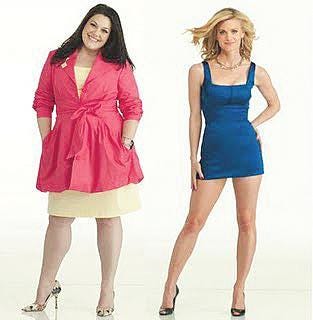
Deb, conventionally, was a smokeshow. She was young and beautiful, and implied not to be particularly intelligent. It seems that though her mother, Donna, was a savvy businesswoman, Donna impressed to Deb that beauty and grace, like through dance, was paramount. Naturally, Deb prioritized these qualities, and life was easier or more convenient as a result. Men pursued her, including the dashing Grayson who bankrolled their lifestyle (which relieved the need for her to support herself as an adult), people were in awe of her, and she wasn’t challenged to substantially change or evolve in any way.
When life lacks friction and everything is convenient, through beauty or otherwise, there are fewer organic opportunities for strife that leads to growth. When a non-rich person encounters a problem that they can’t just throw money at to dismiss (e.g., too long of a commute solved by cab or helicopter), they must confront it. They can confront the problem by solving it, adapting to the problem, or simply Dealing with it. At its worst, too much pain or inconvenience can make a person cruel, which is suboptimal. But inconvenience can also make a person empathetic, scrappy or creative, and grounded.
Deb’s pretty privilege and charmed life shielded her from the friction she may have needed to morally and soulfully develop. Though Jane is also very pretty in her own right, she is older, plus-sized, and a brunette. People treat her noticeably differently, and until she gets used to her new body, her own reflection in the mirror saddens her. Her new makeup and wardrobe go far, but they can’t turn back the clock or change her new body.
Jane’s new perspective makes her more empathetic to other people who struggle with their weight or their appearance. She takes on a few cases about fatness, including one about a fitness influencer selling supplements with dangerous side effects and another about a luxury brand that refuses to carry clothing above a size 10 because they cultivate a certain look.
Jane’s experience with any quality that marginalizes her – fatness in a world of skinny privilege – makes her kinder rather than cruel (phew). Her marginalization made her realize that such discrimination was unjust, and gave her empathy that life isn’t always a handsome prince whisking you off to fund your model lifestyle. Rather, it made her world bigger in a good way. Early on, in a touching moment, she reflects on Deb’s vanity, saying something to the effect of “I hate that I needed people like me [referring to plus-sized people] to feel okay about myself,” finally recognizing that people in bigger bodies are as worthy and human as people who are skinny and conventionally beautiful.
2. Intelligence makes you more reflective.
Intelligence or IQ alone won’t make you kind, but it might make you capable of certain kinds of moral reasoning.
Deb’s self-reported “lower-IQ” oriented her interests around beauty and wealth. Jane’s “higher IQ”, on the surface, enabled her to think rationally and expansively about the moral complexities of her legal cases.
There’s not much definitive data on whether higher IQ is associated with more prosocial behavior, like volunteering or interacting kindly with others, but a large study from Sweden found that fluid intelligence is highly associated with prosocial behavior. But there are other factors besides personal morality that cause people to be kind to one another or act “prosocially,” like pressure or desires to fit in, that might correlate with IQ.
Or, conversely, the writers might have wanted us to think that people with lower IQs might have less understanding of their bad actions’ consequences. This conclusion seems condescending, and wrong, for a woman like Deb, though. Deb went through school and we assume she has average intelligence – I don’t think the writers would have implied that a woman, even a “ditzy” model, was incapable of understanding her own shallowness.
The writers also don’t seem to endorse a belief that smart people are more moral. For example, they try to convey the message that Stacy, Jane’s also-a-model friend from Deb’s lifetime, is kinder than Jane, like when Owen tells Jane that Stacy has “kindness” that Jane doesn’t.
Rather, it seems more likely that Deb was never forced to critically examine her own life’s moral trajectory, and so never did.
Overall, the “intelligence” factor as IQ alone was probably not the writers’ intent for Jane’s moral development. However, her new, high IQ might have given Jane a clear way to live a more complicated life that enabled her growth.
2.A. Intelligence and revealed moral complexity
But intelligence may allow Deb-Jane more revealed complexity than Deb. More knowledge inherently results in more complexity. The world becomes more interesting when you know more about it: music has more detail, you are more sensitive to the differences in the background, like colors, flora and fauna, and what those details reveal about the environment. Similarly, more legal and moral knowledge creates moral complexity in everyday problems that Deb-Jane could now notice, clock, articulate, and analyze.
The Good Place explored a similar perspective with Eleanor and Chidi: moral philosophy lessons from Chidi helped Eleanor understand why selfishness wasn’t the best way to live. The lessons forced Eleanor to notice and clock when she was being selfish, and then grapple with it.
Even though Jane didn’t take moral philosophy lessons like Eleanor and Chidi, her new awareness about the law and world circumstances, beyond fashion, gave her depth that plausibly expanded her potential for moral goodness.
3. Jane had something specific and tractable to give
All people can give through their love, time, and attention. But unfortunately, for most of the non-lawyer population, love, time, and attention won’t get someone off of death row. Jane’s skill and credential as a brilliant lawyer let her give people something unique with direct and specific positive results: people getting money they need to resolve medical debts, acquittals, fighting for the little guy in corporate litigation.
Performing acts of kindness for other people makes you feel happier, and can lead to a virtuous cycle. Feeling like others need you instills a sense of purpose, gratitude, and expansiveness, and then you might keep wanting to give. Caring for something, with specifically defined tasks, makes us feel more connected to the world – for example, it’s why caring for pets can be beneficial for people’s mental healths.
When Jane helped people and won cases, again and again, she embodied the lawyer who helped people. Eventually, helping others became a habit, and because the things that people repeatedly do inevitably shape them, her habits made Jane better.
From playing the part, Jane became the lawyer who helps people, and crucially, believed it herself. At some point – maybe before she became Jane, maybe along the way – she wanted it, and wanted to choose giving by way of her work. Fortuitously, Jane was a talented litigator, and she truly enjoyed her profession. Because lawyering was fun and rewarding for her, she could give in ways she found inherently interesting, enjoyable, and satisfying. Together, she became a person who enjoyed doing good deeds.

4. People expected Jane to be good.
We are not the worst things we’ve done or our bad habits, but we form our lives and characters from what we repeatedly do. Deb-Jane tries to convey that she is Jane-jane by acting like Jane, and that includes reenacting the things that Jane-jane did.
When Deb-Jane wants to play hooky early in the Pilot, her legal assistant-confidante Teri is appalled. Teri tells Deb-Jane that her client, a sympathetic client suing a Big Pharma company, needed her. Deb-Jane, at Deb’s funeral when she remembered how Deb always chose herself, then asks Teri if Teri believes Jane is selfish, and Teri responds flatly that Jane volunteers for Meals on Wheels and does more pro bono work than anyone else at the firm. When the original Jane returns, original-Jane’s first action is to force Deb-Jane to take on a death-row case original-Jane started before Deb-Jane took over, further evidence of original-Jane’s commitment to justice and her craft.
The self-fulfilling prophecy is when people act the way other people expect them to. My dear friend J explains it like this: “When she consistently expected me and accused me of cheating when I wasn’t, eventually I said…man, I’m just gonna cheat.” Woo-woo enthusiasts might call it “the law of attraction” or manifestation. Whatever it’s called, people do tend to feel peer and social pressure to act in the roles they are given.
Because Deb-Jane felt peer pressure to act generously in the beginning, she at first may have gone through the motions because she didn’t know what else to do. Deb-Jane couldn’t go back to her old life, so she tried to be Jane in the ways she understood how. But eventually, by going through the motions, and developing the habits of acting more generously and expansively, she became more “moral.”
Sidebars
Aside 1:
I picked up (and then binged) this show during finals because when my sister described the premise, I realized it had eerie parallels to the Airhead book trilogy by Meg Cabot (2009, predating Drop Dead Diva). Like many of Cabot’s stories, the narrative was unhinged, compelling, and some of the details probably didn’t age very well.
The plot is a near-opposite of Drop Dead Diva: Em, an average-looking teenager, dies and her brain is implanted into Nikki’s body. Nikki is an international superstar, and Em snaps from ugly duckling to baddie overnight and can’t reveal it to anyone, including her best male friend, Christopher, that she is in love with (who undergoes a similar mourning for Em that Grayson did for Deb in Drop Dead Diva). Em transforms from finding all things beauty-related contemptible to finding the inherent virtues in beauty, art, and even stardom. As people are friendly towards her, she is kinder to them in return. Em grows from being sardonic and a little mean to more open-minded, generous, and curious despite, and maybe partly because of, her newfound physical beauty (and the groundedness she had knowing what it’s like to not be a model).
I won’t spoil the Airhead series, but I felt that the Drop Dead Diva and Airhead’s parallels highlighted that even a different perspective alone can be enough to trigger a positive moral transformation.